 Skip to main content
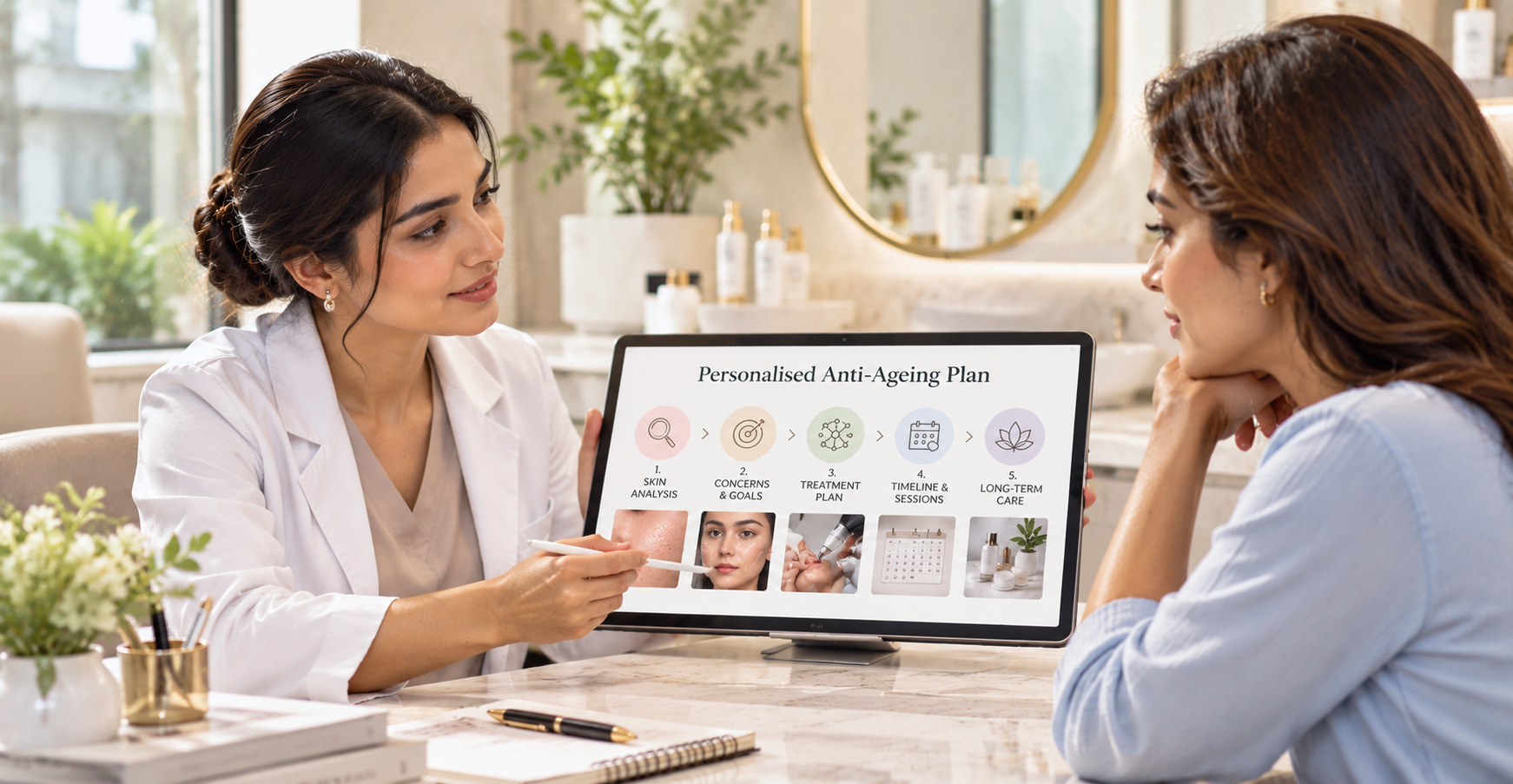
You may come to a clinic thinking you need Botox for your forehead lines. Or perhaps you think you need filler because your cheeks look flatter. Maybe you are considering a laser treatment because your skin looks dull. But what you think you need and what your face actually needs are not always the same. That is where a personalised anti-ageing treatment plan begins. A good plan should not start with a procedure. It should start with an assessment. Ageing is not one single change. Your skin changes. Facial volume can shift. Collagen gradually decreases. Skin may become less hydrated or firm. Facial movements contribute to expression lines, while changes in deeper tissues can affect facial definition and balance. And these changes do not happen at the same age, at the same speed or in the same way for everyone. That is why two people of the same age can have completely different anti-ageing needs. At Skin Series, the approach is built around three simple steps: Identify. Assess. Design. First, understand what is changing. Then assess why it is happening. Finally, create a treatment plan that brings the appropriate treatments together as part of a longer-term strategy. Ageing Well Isn’t an Accident. It’s a Plan. The Skin Series Age Reversal Program is a personalised, doctor-led approach to anti-ageing designed around how your skin and face change over time. It does not begin with: “What treatment would you like?” It begins with: “What is actually changing in your skin and face?” Your doctor first assesses the complete picture. Only then is a treatment plan created. No two patients necessarily receive the same plan because no two faces age in exactly the same way. Step 1: The Conversation Comes Before the Treatment It Starts With Understanding You Before recommending a procedure, your doctor needs to understand what you are noticing and what you want to change. The consultation may cover: What concerns you most about your appearance When you first noticed the change Whether the change has developed gradually or recently Previous aesthetic treatments What worked and what did not Your current skincare routine Lifestyle factors and sun exposure Your expectations Your long-term goals This conversation matters because the same visible concern can have several possible causes. For example, you may say: “I look tired.” But looking tired is not a diagnosis. It could be related to: Dull or dehydrated skin Pigmentation Changes in facial volume Skin laxity Expression lines Loss of facial definition Changes around the eyes A combination of several factors Treating only the most obvious feature may not produce the overall change you are hoping for. Your Goals Matter Too A personalised treatment plan should reflect what you actually want. Some people want to focus on prevention. Others want to address visible ageing changes. Some want to improve skin quality without injectables. Others may be comfortable with a combination of treatments. Some prefer gradual improvement and minimal downtime. There is no single correct approach. Your doctor needs to balance your goals with what is medically appropriate for your skin and face. Step 2: Your Skin Is Assessed Skin Quality: How Your Skin Looks and Feels One major part of facial ageing is skin quality. Your doctor assesses how your skin looks, feels and responds. This may include: Dullness or reduced radiance Uneven skin tone Pigmentation Uneven texture Enlarged pores Fine lines Dehydration Reduced firmness Reduced elasticity Overall skin vitality These concerns can overlap, but they do not always require the same treatment. If Your Skin Looks Dull The focus may be on factors affecting hydration, texture and radiance. If You Have Fine Lines The cause matters. Fine lines associated with dehydration may require a different approach from lines primarily related to repeated facial movement or changes in skin elasticity. If Your Texture Has Changed Your doctor may consider factors such as enlarged pores, scars, surface irregularities and overall skin quality. If Your Skin Is Becoming Less Firm The assessment needs to determine whether the concern is mainly related to the skin itself or whether changes in deeper facial support may also be contributing. The visible concern is only the starting point. Step 3: Your Facial Structure Is Assessed Facial Structure: How Your Face Is Supported and Defined Ageing does not happen only at the surface of the skin. Changes can involve different parts of the face, including soft tissue, facial fat, muscle activity and deeper structural support. You may notice: Facial volume changes Flattening in certain areas Skin laxity Reduced jawline definition Changes in facial balance A heavier appearance A more tired-looking face Fine lines and wrinkles Your doctor looks at how these changes relate to one another rather than treating each feature in isolation. The Same Concern Can Have Different Causes Consider a less-defined jawline. You may simply say: “My jawline doesn’t look as sharp as it used to.” But several factors may contribute, including: Natural facial anatomy Genetics Skin laxity Changes in facial volume Changes in lower-face support The relationship between the chin and jawline Changes in how facial tissues sit over time There is no universal treatment for a less-defined jawline. The appropriate approach depends on why the definition has changed. The same principle applies to the cheeks, under-eye area, wrinkles and overall facial heaviness. Step 4: You and Your Doctor Decide What Should Be Addressed First Not Every Concern Needs Treatment at the Same Time A personalised plan does not mean treating every visible concern at once. After assessment, you and your doctor can identify which concerns matter most to you and which ones are most important to address first. Depending on your needs, the priority may be: Improving overall skin health Managing inflammation Improving skin quality Supporting collagen Addressing expression lines Addressing selected volume changes Improving skin firmness or laxity The order matters. A treatment that may be appropriate later in your journey is not necessarily the right first step. Your doctor may also consider skin sensitivity, barrier health and pigmentation risk when…

Your skin looks dull. Or dehydrated. Maybe it is starting to feel less firm. You may be noticing fine lines that were not as visible before, or your face may look tired even when you feel well-rested. Your skincare routine still helps, but it no longer seems to give you the same healthy, hydrated appearance. That is often when people start exploring skin boosters. Profhilo. Skinvive. PDRN. Jalupro. The names are everywhere, and at first glance, they can seem like different versions of the same treatment. They are not. These treatments have different formulations and are used with different treatment goals in mind. Some are more closely associated with hydration and skin smoothness, while others are used as part of skin-rejuvenation or regenerative treatment strategies. So instead of asking: “Which skin booster is the best?” A better question is: “What does my skin actually need?” At Skin Series, injectable skin treatments begin with an assessment rather than simply choosing the treatment that is currently trending. Your skin quality, facial structure, concerns and long-term goals all matter when deciding what may be appropriate. Because ageing well isn’t an accident. It’s a plan. What Is a Skin Booster? “Skin booster” is a broad term used for injectable treatments that are generally focused on improving aspects of skin quality rather than creating the kind of volume or contour traditionally associated with dermal fillers. Depending on the product, treatment may be intended to support concerns such as: Hydration Skin smoothness Elasticity Skin quality Fine lines Texture Collagen-related skin support Skin regeneration or repair But not every skin booster works in the same way. That is why choosing between Profhilo, Skinvive, PDRN and Jalupro should not be based simply on popularity, price or what someone else has received. The treatment needs to match your actual concern. Profhilo vs Skinvive vs PDRN vs Jalupro: The Quick Comparison Profhilo Primarily associated with hydration, skin quality, elasticity and bioremodelling. It may be considered when early laxity, reduced elasticity or an overall decline in skin quality are concerns. Skinvive An intradermal hyaluronic acid treatment focused specifically on improving skin smoothness in its approved treatment areas. PDRN A regenerative treatment approach associated with skin repair, regeneration and rejuvenation, although products and protocols can vary. Jalupro A family of injectable biorevitalisation treatments combining hyaluronic acid and amino acids, with different formulations designed for different treatment objectives. This is only a starting point. The right choice depends on your skin, your concerns and what your doctor identifies during assessment. Profhilo: When Hydration and Skin Quality Are the Main Concerns Profhilo is an injectable hyaluronic acid treatment designed to improve aspects of skin quality rather than function as a traditional volumising filler. It contains a combination of high- and low-molecular-weight hyaluronic acid and is commonly discussed in relation to skin hydration, elasticity, laxity and overall skin quality. Profhilo May Be Considered If You Notice: Early skin laxity Reduced elasticity Dehydrated-looking skin Fine lines Reduced skin firmness A general decline in skin quality Skin that looks less supple than before The aim is not to reshape your face. It is generally considered when the goal is to improve the quality and appearance of the skin. Is Profhilo the Same as Dermal Filler? No. This distinction is important. Dermal fillers are commonly used when the goal is to restore or add volume to specific areas. Profhilo has a different treatment objective and is associated more with skin quality and bioremodelling. So if your main concern is significant facial volume loss or a structural change, a skin booster may not address the entire concern on its own. Skinvive: Focused on Skin Smoothness Skinvive is an intradermal hyaluronic acid injectable. Its US FDA-approved indication includes improving cheek skin smoothness in adults aged 21 and older. This makes Skinvive different from treatments that have broader skin-quality positioning. Skinvive May Be Considered When Your Main Concern Is: Reduced skin smoothness Dehydrated-looking skin Fine lines associated with skin quality A desire for smoother-looking skin Improving skin quality without creating significant facial volume The key point is that Skinvive is not simply another name for a generic “skin booster.” Its regulatory indication and treatment objective are more specific. That does not make it automatically better than Profhilo. If your main concern is skin smoothness, the treatment discussion may be different from someone primarily concerned about laxity or overall skin remodelling. PDRN: A Regenerative Approach to Skin Rejuvenation PDRN stands for polydeoxyribonucleotide and is often discussed in aesthetic medicine as part of regenerative and skin-repair treatment approaches. PDRN and related polynucleotide treatments have attracted significant attention for their potential role in skin rejuvenation and tissue repair. However, this is an area where it is important to separate interest from certainty. Different PDRN and polynucleotide products can have different formulations, protocols and regulatory classifications. Evidence around these treatments is also continuing to develop. PDRN May Be Discussed When the Treatment Goal Involves: Skin regeneration Supporting skin repair Overall skin quality Recovery-focused strategies Certain skin-rejuvenation concerns PDRN should therefore not be treated as a universal solution for dull or ageing skin. It may have a role in an appropriate treatment plan, but the specific product and clinical objective matter. What Makes PDRN Different? The main distinction is the treatment concept. Hyaluronic acid-based treatments are commonly associated with hydration and skin-quality support. PDRN and related regenerative approaches focus more on biological processes associated with tissue repair and regeneration. So comparing PDRN with Profhilo is not simply a matter of deciding which one is “stronger.” They are based on different treatment concepts. Jalupro: Hyaluronic Acid Plus Amino Acids Jalupro is a range of injectable biorevitalisation products that combine hyaluronic acid with amino acids. The important word here is range. Jalupro is not one single formulation designed to do exactly the same thing in every situation. Different formulations may be used for different treatment goals and areas. Jalupro May Be Considered for Concerns Such As: Reduced skin hydration Early signs of skin ageing Reduced skin vitality…

One of the most common questions people ask about anti-ageing treatments is simple: “When should I start?” Should you begin in your twenties before wrinkles appear? Wait until fine lines become more visible? Or start only when your face begins to lose volume, firmness or definition? The answer is not as simple as choosing a particular age. There is no single “right age” to begin anti-ageing treatments because your face does not age according to a calendar. Some people notice early expression lines in their twenties. Others begin noticing changes in skin quality during their thirties. For some, changes in facial volume, skin laxity or jawline definition become more noticeable later. So the more useful question is not: “How old am I?” It is: “What changes are happening to my skin and face, and do I want to prevent further changes or address what is already visible?” That is the difference between prevention and correction. At Skin Series, anti-ageing is not approached as a collection of individual treatments. It is approached as a personalised, long-term strategy based on how your skin and face are changing. Ageing Well Isn’t an Accident. It’s a Plan. The Skin Series Age Reversal Program is a personalised, doctor-led approach to anti-ageing that looks at the complete picture rather than treating whichever concern happens to be most noticeable that day. No two people age in exactly the same way. One person may have good facial volume but increasingly dull or dehydrated skin. Another may have healthy skin quality but early laxity around the jawline. Someone else may be mainly concerned about expression lines, while another may feel that their face looks flatter, heavier or more tired than it used to. This is why there is no single “best anti-ageing treatment.” Botox may help with certain expression lines. A laser may address specific skin concerns. Skin boosters may improve aspects of skin quality. Fillers may be considered where volume or facial structure has changed. But choosing treatments individually without understanding how they fit together can result in a fragmented approach. The Age Reversal Program starts differently: Assessment first. Treatment follows from there. Prevention vs Correction: What Is the Difference? Anti-ageing treatment can broadly involve two overlapping goals: prevention and correction. They are not completely separate. In many cases, a personalised plan may involve elements of both. What Does Preventive Anti-Ageing Mean? Prevention focuses on maintaining the quality and appearance of your skin before changes become more established. It does not mean trying to stop your face from ageing or treating problems that do not exist. Instead, it may involve: Protecting the skin from environmental damage Maintaining hydration and skin quality Supporting healthy collagen levels Managing early changes in skin texture Addressing early expression lines when appropriate Establishing an effective medical skincare routine The purpose is to preserve what you already have while responding appropriately to early changes. And sometimes, preventive care may not involve a procedure at all. Your doctor may recommend better sun protection, medical skincare and regular monitoring depending on your skin and concerns. What Does Corrective Anti-Ageing Mean? Correction focuses on changes that are already visible. These can include: Fine lines and wrinkles Dull or dehydrated skin Uneven texture Enlarged pores Facial volume loss Skin laxity Loss of jawline definition A tired or heavier appearance The appropriate treatment depends on what is changing, how significant the concern is and how the different aspects of facial ageing are interacting. For many people, the most effective strategy is not prevention or correction. It is a combination of both. When Should You Consider Preventive Anti-Ageing Treatments? Preventive treatment is not tied to a specific birthday. You do not suddenly need anti-ageing treatment because you turned 25 or 30. A better reason to consider a consultation is when you begin noticing changes in your skin that you would like to understand or manage. You may notice: Fine lines beginning to remain visible Expression lines becoming more defined Skin appearing less radiant Increasing dehydration Changes in skin texture Enlarged pores Early loss of firmness Your usual skincare routine no longer giving you the same results The purpose of an early consultation is not necessarily to start multiple treatments. Sometimes, the best recommendation may simply be improved skincare and sun protection. In other situations, your doctor may suggest a targeted treatment to address a specific early concern. Prevention should always be personalised. When Is It Time to Consider Corrective Treatment? Corrective treatment becomes relevant when visible changes are already affecting how you feel about your appearance. You may notice that: You look tired even when you are well-rested Fine lines are becoming more established Your face appears flatter than before Your cheeks or other areas have lost some volume Your jawline is less defined Your skin feels less firm Your complexion looks dull Makeup no longer sits the way it used to Your face looks different in photographs These changes often happen gradually. A feature may soften. Skin may become less radiant. Volume may shift. Fine lines may become more noticeable. Eventually, you may realise that individual products or treatments are addressing separate concerns without addressing the overall change in your face. That is when a more coordinated approach may be useful. Your Face Changes in More Than One Way Ageing Is About More Than Wrinkles Wrinkles are one part of facial ageing, but they are not the whole picture. Changes generally occur across two interconnected areas: skin quality and facial structure. 1. Skin Quality: How Your Skin Looks and Feels Changes in skin quality may include: Dullness or reduced radiance Uneven texture Enlarged pores Dehydration Early fine lines Loss of a healthy-looking glow A personalised treatment plan may focus on improving hydration, texture, luminosity and overall skin quality. The aim is healthy-looking skin that appears naturally refreshed rather than obviously treated. 2. Facial Structure: How Your Face Looks and Feels Defined Ageing can also involve changes in the structure and support of the face. You may notice: Fine…

What Is the Best Treatment for Pigmentation? A Complete Guide by Skin Type & Cause Pigmentation is often treated as one simple skin concern. A dark spot appears, you use a brightening serum or book a treatment, and expect the pigmentation to disappear. But pigmentation is rarely that simple. Two people can have dark marks that look similar and still need completely different treatment approaches. One person may have post-acne marks. Another may have pigmentation left behind after skin irritation or inflammation. Someone else may have melasma influenced by hormones and sun exposure. Treating all of these concerns in the same way can lead to disappointing results and, in some cases, unnecessary irritation. That is why the right question is not simply: “What is the best treatment for pigmentation?” It is: “What type of pigmentation do I have, and why did it develop?” At Skin Series, pigmentation treatment begins with understanding the type, cause, pattern and behaviour of the pigmentation, along with your skin tone and sensitivity. The aim is not simply to make dark marks lighter for a short period. It is to create a treatment pathway that is appropriate for your skin while reducing avoidable irritation and addressing factors that may contribute to recurrence. Pigmentation Is Not Just One Skin Concern Pigmentation refers to visible changes in skin colour caused by changes in melanin, the pigment that gives your skin its natural colour. When melanin is produced or distributed unevenly, it can appear as: Dark spots Acne marks Brown or grey-brown patches Uneven skin tone Areas of increased pigmentation But the reason behind the pigmentation can vary considerably. Pigmentation may develop following: Acne or breakouts Skin inflammation or injury Sun exposure Visible light exposure Hormonal changes Melasma Skin irritation Aggressive cosmetic treatments Certain medications or medical conditions Pigmentation can also vary in how deeply it sits within the skin. Some concerns may be relatively superficial, while more persistent pigmentation can take longer to improve. This is why a treatment that works well for one person may not necessarily be the right choice for someone else. Why Does the Type of Pigmentation Matter? The colour or appearance of a dark patch does not always tell you exactly what is happening underneath. The cause can influence how the pigmentation behaves, whether new pigmentation continues to form and how your skin responds to treatment. For example, if active acne is continuing to create inflammation, treating the existing marks alone will not prevent new marks from appearing. Similarly, if pigmentation is influenced by hormonal factors or repeated sun exposure, a single treatment may not address everything contributing to the problem. Before choosing treatment, your doctor may consider: What caused the pigmentation How persistent the pigmentation is Your skin tone and skin behaviour Whether the original trigger is still active Your overall skin quality and sensitivity Only after these factors are understood can an appropriate treatment pathway be planned. The Most Common Types of Pigmentation 1. Post-Acne Marks Post-acne pigmentation is one of the most common concerns people experience after a breakout. The acne may have completely cleared, but the mark remains. Depending on your skin tone and how your skin responded to the inflammation, these marks may appear brown, grey-brown or darker than the surrounding skin. The frustrating part is that new acne can create new marks while older pigmentation is still fading. This can make it feel as though your pigmentation treatment is not working, when the real issue is that new pigmentation is continually being added. The Treatment Priority If active acne is still present, controlling the acne may need to come first. Once the skin is more stable, a pigmentation-focused treatment pathway can be considered for the marks that remain. The Skin Series Acne Erase Program is designed around active acne and recurring breakouts, while the Blemish Free Program is intended for concerns such as pigmentation and marks after the skin has cleared. 2. Post-Inflammatory Pigmentation Post-inflammatory pigmentation develops after inflammation or injury to the skin. Acne is a common cause, but it can also follow: Skin irritation Eczema and other inflammatory conditions Cuts or injuries Insect bites Burns Aggressive cosmetic procedures Excessive exfoliation Picking or scratching the skin The important point is that inflammation can trigger pigmentation. This is particularly relevant for brown and Indian skin tones, where post-inflammatory pigmentation can be more noticeable and persistent. The Treatment Priority The skin needs a controlled approach. The original source of inflammation should be addressed where possible, while the pigmentation treatment itself should be selected carefully to avoid unnecessary irritation. Treatment intensity and technology selection therefore matter. 3. Sun-Induced Pigmentation and Tanning Repeated exposure to sunlight can stimulate melanin production and make existing pigmentation appear darker. Tanning is the skin’s response to ultraviolet exposure, while ongoing sun exposure can also contribute to uneven tone and make existing marks more noticeable. This is why pigmentation treatment does not end when you leave the clinic. If the skin continues to receive significant exposure to the same trigger, pigmentation can gradually return. The Treatment Priority Pigmentation correction should be supported by consistent sun protection. Daily broad-spectrum sunscreen is an important part of protecting pigmentation-prone skin. Depending on your skin and the type of pigmentation you have, your doctor may also recommend additional protection against visible light. 4. Hormonal Pigmentation and Melasma Melasma is different from many forms of post-inflammatory pigmentation. It commonly appears as patches of pigmentation, often on areas such as the cheeks, forehead, nose or upper lip. Hormonal changes and sun exposure can influence melasma, among other factors. Melasma can be persistent and may recur even after it improves. Because of this, it is generally better approached as a condition requiring long-term management, rather than as a simple dark spot that can be permanently removed with one treatment. The Treatment Priority Melasma needs a personalised treatment pathway. If you suspect that you have melasma, it is important to have the pigmentation assessed by a doctor rather than assuming that every…

You treated the pigmentation. The marks faded. Your skin looked clearer for a while. Then, gradually, the patches started becoming visible again. Maybe it happened after a holiday in the sun. Maybe another acne breakout left behind new marks. Or perhaps the pigmentation returned even though you were still using your favourite brightening serum. For many people, this creates a frustrating cycle: treat, improve, stop, and watch the pigmentation come back. But recurrent pigmentation does not necessarily mean that your previous treatment failed. Often, the visible pigmentation has been reduced, but the factors responsible for triggering excess pigment are still present. That is why long-term pigmentation management is about more than simply making dark spots lighter. It involves understanding what type of pigmentation you have, what is triggering it, how your skin responds to treatment and how the results will be maintained over time. At Skin Series, pigmentation is approached as a skin concern that needs assessment rather than a problem that can be treated with the same solution every time. Post-acne marks, sun-induced pigmentation, uneven skin tone and conditions such as melasma can behave differently and may require different approaches. The goal is not simply temporary brightness. The goal is clearer, more even-looking skin supported by a treatment and maintenance strategy that addresses the factors contributing to recurrence. Why Does Pigmentation Keep Coming Back? Pigmentation occurs when the skin produces or retains more melanin, the pigment responsible for skin colour. It can appear as dark spots, patches, acne marks or an uneven complexion. The important thing to understand is that pigmentation is often a response to another trigger. If that trigger continues, your skin may continue producing excess pigment even after previous pigmentation has faded. This is why you can see improvement after treatment and then notice new or returning pigmentation weeks or months later. Some common reasons include: Ongoing sun and visible-light exposure Repeated acne or skin inflammation Picking, scratching or irritating the skin Hormonal changes Using overly aggressive treatments Irritating skincare products Stopping maintenance too early Treating the wrong type of pigmentation Certain medications or underlying skin conditions So instead of only asking, “Which treatment removes pigmentation?”, it is often more useful to ask: “Why is this pigmentation happening, and what is causing it to return?” This distinction becomes particularly important for medium and darker skin tones, which can be more prone to post-inflammatory pigmentation and may develop more noticeable pigmentation following skin irritation or inflammation. 1. Ongoing Sun Exposure May Be Triggering Pigmentation Sun Exposure Is One of the Biggest Reasons Pigmentation Returns You may have completed a treatment and followed your skincare routine consistently, but regular sun exposure can still encourage pigment production. UV radiation can stimulate melanin production and make existing pigmentation appear darker. Visible light can also contribute to pigmentation, particularly in people with darker skin tones and those prone to melasma. This is why sun protection is not simply an additional skincare step when you are treating pigmentation. It is part of the treatment strategy. For pigmentation-prone skin, consistent broad-spectrum sunscreen is important. Depending on your pigmentation and skin type, your doctor may also recommend tinted sunscreen containing iron oxides, which can provide additional protection against visible light. Treatment can reduce existing pigmentation, but if the same triggers continue to affect your skin every day, maintaining the improvement becomes more difficult. 2. Acne and Inflammation Are Still Creating New Marks Your acne may have cleared, but the pigmentation it left behind can remain. Then another breakout appears. It heals. Another dark mark develops. This is known as post-inflammatory hyperpigmentation, where darker areas develop after inflammation or injury to the skin. Acne is a common trigger, but irritation, dermatitis, burns and other inflammatory conditions can also leave pigmentation behind. This creates an important treatment principle: If new inflammation continues, new pigmentation can continue forming. You may be successfully fading older marks while your skin is simultaneously developing new ones. That is why someone with active, uncontrolled acne may need to address the acne itself before focusing primarily on pigmentation. If acne is the trigger, treating only the resulting marks may not solve the underlying problem. For persistent acne and recurring breakouts, the Skin Series Acne Erase Program may be a more appropriate starting point, depending on your doctor’s assessment. 3. You May Be Treating the Wrong Type of Pigmentation Not every dark patch is the same. Two people may appear to have similar pigmentation, but one may have post-acne marks, another may have melasma, and another may have pigmentation associated with medication or another underlying condition. These concerns do not necessarily respond to the same treatment. Melasma, for example, can be influenced by sunlight, hormones, pregnancy and certain medications. It can also be persistent and may require ongoing management rather than a single treatment. This is why assessment should come before treatment. Before deciding how pigmentation should be treated, your doctor may need to consider: What type of pigmentation you have Where the pigmentation is located How deep or persistent it appears to be Your skin tone and how your skin responds to inflammation Possible triggers Whether there is an active underlying skin concern If the pigmentation type is misunderstood, even a treatment that successfully reduces visible pigment may not give you the long-term improvement you are expecting. 4. Your Treatment May Have Been Too Aggressive When pigmentation is stubborn, it can be tempting to believe that stronger treatment will automatically produce faster results. But with pigmentation-prone skin, more aggressive does not always mean more effective. Excessive irritation can trigger inflammation, and inflammation can contribute to further pigmentation. Certain peels, lasers and light-based procedures can also aggravate pigmentation in some people when the treatment is not appropriately selected or adjusted for their skin. This is particularly important for brown and Indian skin tones. Brown Skin Needs a Thoughtful Treatment Approach Indian and brown skin can be more susceptible to post-inflammatory pigmentation. This means that unnecessarily irritating or aggressive treatment can sometimes become…
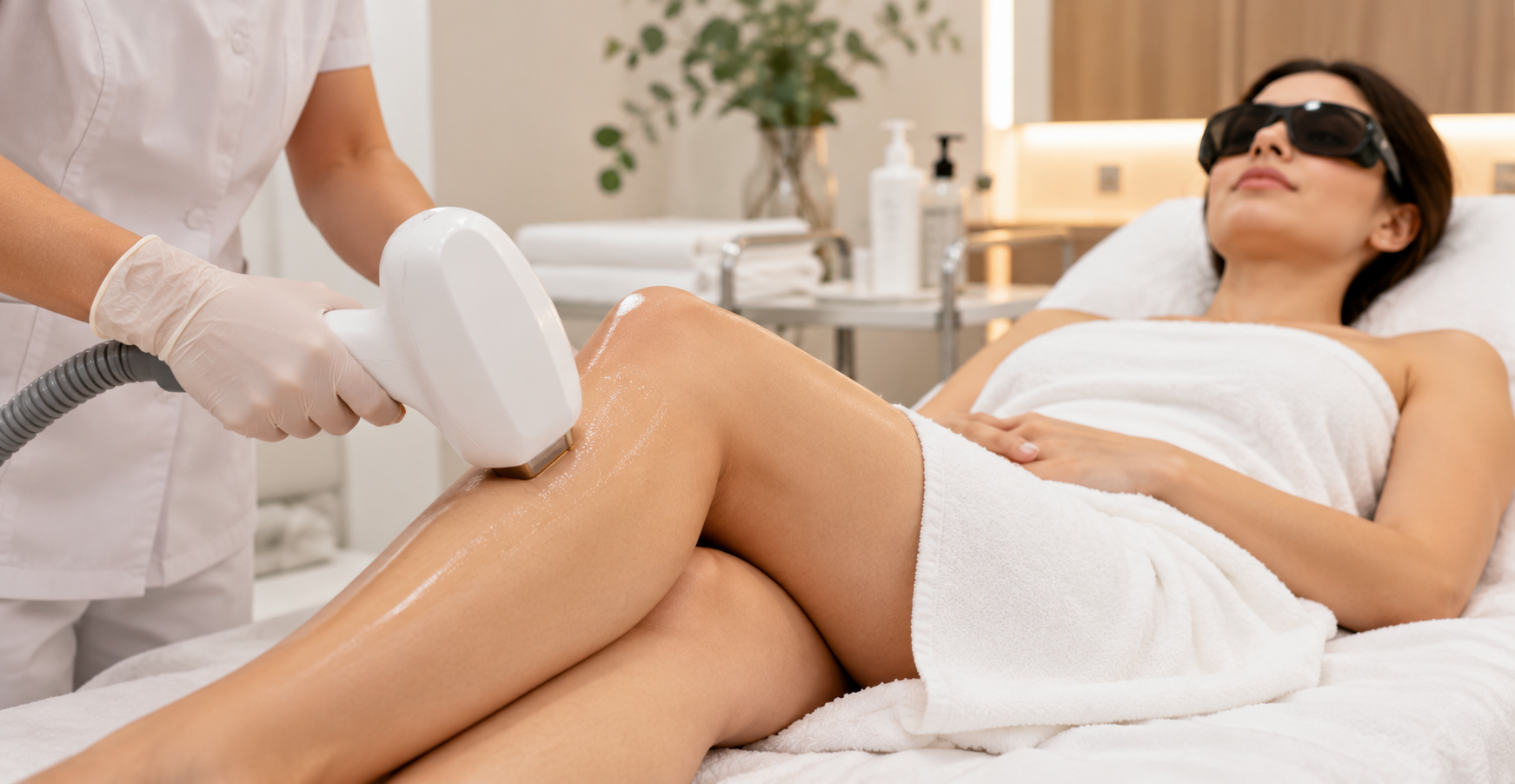
Laser hair removal has become one of the most popular long-term hair reduction treatments in Mumbai for both women and men. Whether you are tired of regular shaving, waxing appointments or dealing with ingrown hairs, laser treatment can offer a more convenient solution. However, one of the first questions most people ask is: How much does laser hair removal cost in Mumbai? The answer depends on several factors, including the treatment area, number of sessions, hair density, skin type, laser technology and clinic. In Mumbai, laser hair removal for small areas can start at approximately ₹800–₹1,500 per session, while larger areas and full-body packages can cost significantly more. A complete treatment course usually involves multiple sessions because hair grows in different cycles. Laser Hair Removal Cost in Mumbai: Quick Price Guide Here is an approximate cost guide for laser hair removal in Mumbai. Prices vary between clinics, technologies and packages. Treatment Area Approximate Cost Per Session Estimated Cost for 6–8 Sessions Upper Lip / Chin ₹800–₹3,500 ₹4,800–₹20,000 Underarms ₹1,200–₹5,000 ₹7,200–₹30,000 Bikini Line ₹1,500–₹8,000 ₹9,000–₹50,000 Half Arms ₹2,000–₹6,000 ₹12,000–₹48,000 Full Arms ₹2,000–₹10,000 ₹12,000–₹80,000 Half Legs ₹3,000–₹6,000 ₹18,000–₹50,000 Full Legs ₹3,000–₹10,000 ₹18,000–₹80,000 Full Back ₹3,500–₹12,000 ₹21,000–₹1,00,000 Full Body ₹8,000–₹18,000+ ₹48,000–₹1,44,000+ These are indicative market ranges rather than fixed prices. Always confirm exactly which body areas and how many sessions are included in your package. Some clinics offer introductory prices or discounted multi-session packages that can make the overall cost lower than booking individual sessions. How Much Does Full-Body Laser Hair Removal Cost in Mumbai? Full-body laser hair removal in Mumbai can vary considerably depending on the clinic and package. Current published pricing ranges from around ₹29,999 for a six-session promotional package to much higher premium-clinic packages. Other published Mumbai estimates place a complete 6–8 session full-body course in the broader ₹48,000 to ₹1,44,000 range. The reason for this difference is simple: “full body” does not mean exactly the same thing at every clinic. One package may include the face, underarms, arms, legs and bikini line, while another may exclude areas such as the back, abdomen, shoulders or intimate areas. Before paying for a full-body package, ask: A low price can be attractive, but understanding the complete package is more important than comparing only the advertised session price. How Many Laser Hair Removal Sessions Will You Need? Most people need approximately 6 to 8 laser hair removal sessions to achieve significant and long-lasting hair reduction. Sessions are commonly scheduled several weeks apart because laser treatment works most effectively when hair is in an active growth phase. Not all hairs are in this phase at the same time, which is why a single treatment cannot remove every hair. Some people may need fewer or more sessions depending on: After completing the initial course, some people may choose occasional maintenance sessions if new hair growth develops over time. Is Laser Hair Removal Permanent? Laser hair removal is more accurately described as long-term or permanent hair reduction, rather than a guarantee that every single hair will disappear forever. The treatment targets hair follicles and can significantly reduce future hair growth, but hormonal changes and individual biology can influence regrowth. After a full treatment course, many people notice that the remaining hair becomes finer, lighter and easier to manage. Some areas may remain smooth for extended periods, while others may require occasional touch-up sessions. A reliable clinic should explain realistic expectations instead of promising 100% permanent hair removal in every case. What Affects the Cost of Laser Hair Removal in Mumbai? 1. Treatment Area Small areas such as the upper lip and chin cost less because they take less time to treat. Larger areas, including the full back, legs and full body, require more treatment time and therefore cost more. 2. Number of Sessions A package with six or eight sessions will naturally cost more upfront than a single appointment. However, package pricing can often offer better value per session. 3. Hair Type and Density Coarse and dense hair may require a different treatment approach compared with fine hair. Your treatment plan can therefore influence the total number of sessions required. 4. Laser Technology Not all hair reduction treatments use the same technology. Clinics may use different laser systems depending on skin tone, hair type and treatment requirements. The technology used can affect both the cost and the treatment experience. 5. Clinic and Specialist Expertise A dermatologist-led or medically supervised clinic may have different pricing compared with a basic salon treatment. The practitioner’s experience, consultation process, equipment and safety protocols can all affect the overall cost. Laser Hair Removal Cost for Women in Mumbai Women commonly choose laser hair removal for areas such as the upper lip, chin, underarms, bikini line, arms and legs. Facial hair and underarms are generally among the more affordable areas because of their smaller treatment size. Full-body packages can be more cost-effective for people who regularly spend money on multiple waxing appointments throughout the year. However, it is important to compare the total treatment plan rather than simply choosing the lowest advertised price. Laser Hair Removal Cost for Men in Mumbai Laser hair removal is also increasingly popular among men. Common treatment areas include the chest, back, shoulders, abdomen, arms and full body. Men’s treatments may cost more in some cases because larger surface areas and denser hair can increase treatment time. What Happens During a Laser Hair Removal Session? If it is your first appointment, the process usually begins with a consultation. The specialist may assess your skin tone, hair type, treatment goals and medical history. A patch test may also be recommended before beginning treatment. During the session, the treatment area is prepared and the laser device is used to deliver controlled light energy to the hair follicles. You may feel a mild snapping or warm sensation, although the experience varies depending on the area and technology. The duration of a session depends on the treatment area. Small areas such as the upper lip can be completed quickly, while…

FESTIVE SKINCARE GUIDE As the festive season approaches, Diwali brings with it the joy of lights, celebrations, and endless picture-perfect moments. But amidst the excitement, late nights, and festive sweets, our skin often takes the hit — showing dullness, fatigue, and breakouts just when we want it to glow the most. Here’s a simple, expert approved guide to get your skin Diwali ready. Start Early – Skin Prep is Key Good skin isn’t built overnight. Ideally, begin your festive prep 3–4 weeks before Diwali. This gives your skin enough time to respond to treatments, heal, and renew itself naturally. Consider gentle superficial chemical peels that can help resurface dull skin and give you an instant brightening effect. Use a gentle exfoliator at home twice a week to remove buildup and reveal fresh skin. Hydration = Glow When your skin is hydrated, it reflects light better — that’s your natural “glow filter.” Use a hyaluronic acid serum under your moisturizer daily. Pro tip: Use it on damp skin to lock the moisture in. Keep a hydrating mist handy for instant refreshment. Try skin boosters like PDRN or Skinvive for that plump, dewy look just in time for the festivities. Focus on Pigmentation and Uneven Skin Tone Festive stress and sun exposure can make pigmentation worse. Add a vitamin C serum in the morning and a niacinamide or alpha arbutin at night. Treatments like laser toning can even out tone and bring clarity to your complexion. If you’re acne prone and are looking to target excess sebum or congestion along with skin brightening, the Carbon Laser could be a great choice giving you a clean, refreshed and brighter look instantly. Lightweight tinted sunscreens can help conceal dark spots before your makeup goes on. Don’t Skip Sun Protection Even if you’re spending more time indoors during the festivities, the light from diyas, lamps, and LED decor emits heat that can trigger melanin activity causing or worsening existing hyperpigmentation. So, ensure you don’t skip your sunscreen. Apply a lightweight SPF 30–50 daily, even at home. The Week Before Diwali: Go for Instant Glow Treatments Now is the time to focus on treatments that deliver immediate radiance. Try Medical Grade Facials 3–5 days before Diwali for that camera-ready finish. Avoid new treatments right before the festival to minimize the risk of redness or purging. During Diwali: Keep It Simple Switch to a minimal skincare routine — gentle cleanser, hydrating serum, moisturizer, and sunscreen. Use a calming mist or thermal water to keep skin fresh through the celebrations. Post-Festive Recovery After all the makeup, sweets, and late nights, give your skin a detox. Book a rejuvenation facial or LED therapy session to calm inflammation and restore balance. IV drips to flush out toxins, rehydrate the body and restore balance. Hydrate, both topically and internally. Final Thoughts Healthy, glowing skin isn’t about how many products you use, but how consistent and mindful you are with your care. Whether you’re getting ready for family gatherings or festive photos, the goal is simple: skin that radiates health and happiness. This Diwali, let your skin shine as bright as the lights around you! Ready for Your Festive Glow? Visit Skin Series, Thane West Book Consultation