

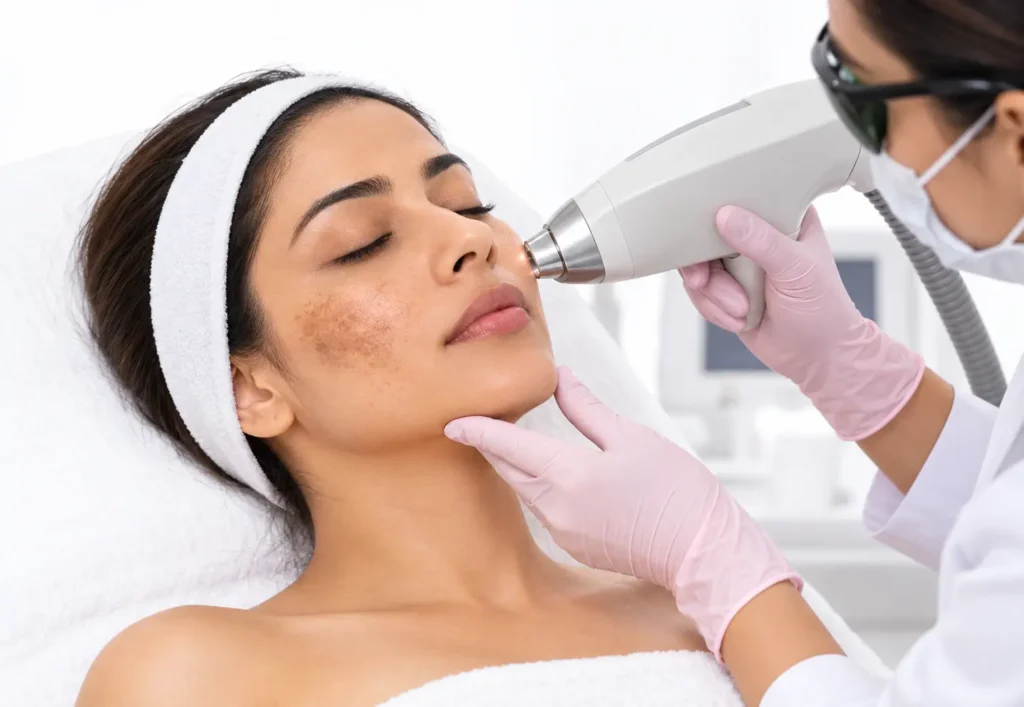
What Is the Best Treatment for Pigmentation? A Complete Guide by Skin Type & Cause
Pigmentation is often treated as one simple skin concern. A dark spot appears, you use a brightening serum or book a treatment, and expect the pigmentation to disappear.
But pigmentation is rarely that simple.
Two people can have dark marks that look similar and still need completely different treatment approaches. One person may have post-acne marks. Another may have pigmentation left behind after skin irritation or inflammation. Someone else may have melasma influenced by hormones and sun exposure.
Treating all of these concerns in the same way can lead to disappointing results and, in some cases, unnecessary irritation.
That is why the right question is not simply:
“What is the best treatment for pigmentation?”
It is:
“What type of pigmentation do I have, and why did it develop?”
At Skin Series, pigmentation treatment begins with understanding the type, cause, pattern and behaviour of the pigmentation, along with your skin tone and sensitivity. The aim is not simply to make dark marks lighter for a short period. It is to create a treatment pathway that is appropriate for your skin while reducing avoidable irritation and addressing factors that may contribute to recurrence.
Pigmentation Is Not Just One Skin Concern
Pigmentation refers to visible changes in skin colour caused by changes in melanin, the pigment that gives your skin its natural colour.
When melanin is produced or distributed unevenly, it can appear as:
- Dark spots
- Acne marks
- Brown or grey-brown patches
- Uneven skin tone
- Areas of increased pigmentation
But the reason behind the pigmentation can vary considerably.
Pigmentation may develop following:
- Acne or breakouts
- Skin inflammation or injury
- Sun exposure
- Visible light exposure
- Hormonal changes
- Melasma
- Skin irritation
- Aggressive cosmetic treatments
- Certain medications or medical conditions
Pigmentation can also vary in how deeply it sits within the skin. Some concerns may be relatively superficial, while more persistent pigmentation can take longer to improve.
This is why a treatment that works well for one person may not necessarily be the right choice for someone else.
Why Does the Type of Pigmentation Matter?
The colour or appearance of a dark patch does not always tell you exactly what is happening underneath.
The cause can influence how the pigmentation behaves, whether new pigmentation continues to form and how your skin responds to treatment.
For example, if active acne is continuing to create inflammation, treating the existing marks alone will not prevent new marks from appearing.
Similarly, if pigmentation is influenced by hormonal factors or repeated sun exposure, a single treatment may not address everything contributing to the problem.
Before choosing treatment, your doctor may consider:
- What caused the pigmentation
- How persistent the pigmentation is
- Your skin tone and skin behaviour
- Whether the original trigger is still active
- Your overall skin quality and sensitivity
Only after these factors are understood can an appropriate treatment pathway be planned.
The Most Common Types of Pigmentation
1. Post-Acne Marks
Post-acne pigmentation is one of the most common concerns people experience after a breakout.
The acne may have completely cleared, but the mark remains. Depending on your skin tone and how your skin responded to the inflammation, these marks may appear brown, grey-brown or darker than the surrounding skin.
The frustrating part is that new acne can create new marks while older pigmentation is still fading.
This can make it feel as though your pigmentation treatment is not working, when the real issue is that new pigmentation is continually being added.
The Treatment Priority
If active acne is still present, controlling the acne may need to come first.
Once the skin is more stable, a pigmentation-focused treatment pathway can be considered for the marks that remain.
The Skin Series Acne Erase Program is designed around active acne and recurring breakouts, while the Blemish Free Program is intended for concerns such as pigmentation and marks after the skin has cleared.
2. Post-Inflammatory Pigmentation
Post-inflammatory pigmentation develops after inflammation or injury to the skin.
Acne is a common cause, but it can also follow:
- Skin irritation
- Eczema and other inflammatory conditions
- Cuts or injuries
- Insect bites
- Burns
- Aggressive cosmetic procedures
- Excessive exfoliation
- Picking or scratching the skin
The important point is that inflammation can trigger pigmentation.
This is particularly relevant for brown and Indian skin tones, where post-inflammatory pigmentation can be more noticeable and persistent.
The Treatment Priority
The skin needs a controlled approach.
The original source of inflammation should be addressed where possible, while the pigmentation treatment itself should be selected carefully to avoid unnecessary irritation.
Treatment intensity and technology selection therefore matter.
3. Sun-Induced Pigmentation and Tanning
Repeated exposure to sunlight can stimulate melanin production and make existing pigmentation appear darker.
Tanning is the skin’s response to ultraviolet exposure, while ongoing sun exposure can also contribute to uneven tone and make existing marks more noticeable.
This is why pigmentation treatment does not end when you leave the clinic.
If the skin continues to receive significant exposure to the same trigger, pigmentation can gradually return.
The Treatment Priority
Pigmentation correction should be supported by consistent sun protection.
Daily broad-spectrum sunscreen is an important part of protecting pigmentation-prone skin. Depending on your skin and the type of pigmentation you have, your doctor may also recommend additional protection against visible light.
4. Hormonal Pigmentation and Melasma
Melasma is different from many forms of post-inflammatory pigmentation.
It commonly appears as patches of pigmentation, often on areas such as the cheeks, forehead, nose or upper lip. Hormonal changes and sun exposure can influence melasma, among other factors.
Melasma can be persistent and may recur even after it improves.
Because of this, it is generally better approached as a condition requiring long-term management, rather than as a simple dark spot that can be permanently removed with one treatment.
The Treatment Priority
Melasma needs a personalised treatment pathway.
If you suspect that you have melasma, it is important to have the pigmentation assessed by a doctor rather than assuming that every pigmentation treatment or laser protocol will be suitable.
The Blemish Free Program is not a universal treatment for melasma. Your doctor can determine whether another approach is more appropriate for your skin.
5. Pigmentation Caused by Irritation or Incorrect Treatment
Sometimes the attempt to achieve clearer skin can contribute to the pigmentation problem.
Using too many active ingredients, over-exfoliating or undergoing aggressive treatments without appropriate assessment can irritate the skin.
The cycle can look like this:
Irritation → inflammation → pigmentation → more aggressive treatment → further irritation.
This is particularly important for pigmentation-prone brown skin.
The answer is not necessarily to avoid treatment altogether.
It is to choose treatment more carefully.
Brown Skin Requires a Thoughtful Approach
Brown and Indian skin tones can be more prone to noticeable post-inflammatory pigmentation following inflammation or injury.
This does not mean that pigmentation cannot be treated effectively.
It means treatment needs to balance correction with skin safety.
Aggressive treatment does not automatically mean faster results. In some situations, unnecessary irritation can make pigmentation more difficult to manage.
That is why your skin tone, sensitivity, pigmentation pattern and response to treatment should all be considered when planning pigmentation treatment.
At Skin Series, the approach is not about using the strongest possible treatment.
It is about choosing the right treatment for your specific pigmentation concern.
Why One Facial Cannot Correct Every Type of Pigmentation
A facial may temporarily make your skin appear brighter and fresher.
But temporary brightness and long-term pigmentation correction are not the same thing.
A One-Time Treatment or Facial May:
- Focus primarily on the visible surface concern
- Provide temporary brightness
- Not identify the underlying cause
- Not assess the persistence or pattern of pigmentation
- Not account for your skin tone and sensitivity
- Not provide a structured maintenance strategy
- Encourage repeated treatment whenever pigmentation becomes noticeable
A Doctor-Led Treatment Program Can:
- Begin with an assessment of the pigmentation
- Consider the possible cause and triggers
- Take your skin tone and behaviour into account
- Use a progressive treatment approach
- Allow your response to treatment to be reviewed
- Include personalised home care
- Provide guidance for protecting and maintaining improvement
The goal is not simply to make pigmentation appear lighter today.
The goal is to create a treatment strategy that makes sense for your skin and your pigmentation.
The Skin Series Approach: Assess Before You Treat
At Skin Series, pigmentation is not approached as a one-size-fits-all concern.
Two patients may both have dark marks, but the reasons behind those marks can be very different.
One may have post-acne pigmentation.
Another may have pigmentation following inflammation.
Another may have a chronic pigmentary condition requiring a different management approach.
This is why assessment comes first.
Before treatment begins, your doctor considers:
01. The type of pigmentation
Understanding what kind of pigmentation you are dealing with helps determine the appropriate treatment pathway.
02. The pigmentation pattern
Where the pigmentation appears and how it is distributed can provide important information.
03. Your skin tone and behaviour
Brown and Indian skin can respond differently to inflammation and certain treatments, making treatment selection particularly important.
04. Possible triggers
Sun exposure, acne, irritation, hormones and other factors may contribute to pigmentation.
05. Your overall skin quality
Your skin’s sensitivity, texture and general condition can also influence the treatment approach.
Only after these factors are considered can a treatment roadmap be created.
Introducing the Skin Series Blemish Free Program
Your Skin Cleared. The Marks Didn’t.
“Foundation covers it. The Blemish Free Program fixes it.”
The breakout is gone.
The inflammation has settled.
But the marks remain.
You may still be dealing with post-acne pigmentation, uneven skin tone or persistent dark marks despite trying brightening products and other skincare solutions.
The Skin Series Blemish Free Program is a structured, doctor-led program designed for appropriate pigmentation concerns where the skin has cleared but visible marks remain.
It is not intended to be a one-session brightness treatment.
The program combines structured in-clinic treatment with personalised home care and ongoing doctor review.
Why Choose a Program Instead of a Single Session?
Pigmentation correction is progressive.
A single treatment may improve the appearance of pigmentation, but a structured program creates an opportunity to assess the skin over time and adjust the treatment approach according to how it responds.
The Blemish Free Program includes:
01. Initial Skin Assessment
Before treatment begins, your skin is clinically assessed to understand the pigmentation pattern, skin type and tone concerns.
Your treatment is built around your skin.
Not a template.
02. Six Structured Depigmenting Laser Sessions
The program includes six medical-grade Q-Switch laser sessions, scheduled every two weeks as part of the structured treatment pathway.
Your doctor determines whether this approach is suitable for your pigmentation and can assess your response as treatment progresses.
03. Personalised Home Care
What you do between sessions matters.
A personalised medical skincare protocol can support the treatment journey and help protect the progress being made.
Your home care is selected according to your skin and treatment plan rather than following a generic routine.
04. Doctor Review at Every Session
Your skin may not respond identically at every stage.
Your doctor reviews your skin’s response throughout the program and can adjust treatment parameters when appropriate.
05. Progress Tracking
Pigmentation can improve gradually.
Tracking your progress against your starting point allows the treatment journey to be assessed more objectively rather than relying only on how your skin looks on a particular day.
06. Maintenance Guidance
Pigmentation management does not necessarily end with the final session.
Once the initial treatment phase is complete, you receive guidance on protecting your skin and maintaining the improvement.
Because the goal is not simply to improve pigmentation.
It is to help you maintain clearer-looking skin.
Technology Matters. Expertise Matters More.
Technology plays an important role in pigmentation treatment, but the device itself is not the entire treatment.
The same technology may not be appropriate at the same settings for every patient.
Treatment planning needs to consider:
- Which treatment is appropriate
- What intensity is suitable
- Your pigmentation type
- Your skin tone
- How your skin is responding
- Whether treatment parameters need to be adjusted
This is where doctor oversight becomes important.
The goal should not be to use the strongest possible treatment.
The goal should be to use the right treatment for the right pigmentation concern at the right stage of the treatment journey.
What Can You Expect from the Blemish Free Program?
Realistic Results and Timelines
Pigmentation correction is gradual, and every person’s response can be different.
Some patients may begin noticing improvements in brightness and skin evenness as treatment progresses. More persistent pigmentation may require additional time and ongoing management.
The Blemish Free Program consists of six sessions spaced every two weeks, supported by personalised home care and doctor review.
Your results can depend on:
- Type of pigmentation
- Persistence and depth of pigmentation
- Skin tone and skin behaviour
- Existing triggers
- Individual response to treatment
- Consistency with prescribed home care
- Ongoing sun protection
What About Downtime?
The program is designed to involve minimal routine disruption, but your individual experience can vary.
Your doctor will explain what to expect from your treatment and provide appropriate aftercare guidance.
Who Is the Blemish Free Program For?
The program may be suitable if:
- You have post-acne marks that have not faded adequately
- You are dealing with post-inflammatory pigmentation
- Your skin appears uneven, dull or patchy
- Brightening skincare has not provided the improvement you expected
- You want a structured, doctor-led treatment plan
- You want progressive treatment rather than a one-off cosmetic session
A consultation is important before starting treatment so your doctor can determine whether the program is appropriate for your pigmentation.
Who May Need a Different Approach?
The Blemish Free Program is not designed for every type of pigmentation.
It may not be appropriate as the primary treatment pathway for:
- Active, uncontrolled acne that continues to create new marks
- Melasma requiring a different management strategy
- Acanthosis nigricans
- Pigmentation associated with an underlying medical condition
If the trigger is still active, that concern may need to be addressed first.
How to Manage Pigmentation Long-Term
Long-term pigmentation management is about more than correcting the pigmentation you can see today.
1. Identify the Cause
Before choosing a treatment, understand whether your pigmentation may be associated with acne, inflammation, sun exposure, hormones, irritation or another factor.
2. Address the Active Trigger
If acne is creating new pigmentation, the acne needs to be managed.
If irritation is causing inflammation, your skincare routine may need to be simplified.
If another underlying factor is suspected, discuss it with your doctor.
3. Correct Progressively
Pigmentation may respond better to a structured treatment journey than repeated, disconnected treatments.
A progressive approach allows your skin’s response to guide the next stage.
4. Protect Your Skin
Consistent sun protection is an important part of pigmentation management.
Avoiding unnecessary irritation is also important, particularly if your skin is prone to post-inflammatory pigmentation.
5. Maintain the Improvement
Pigmentation-prone skin may require ongoing protection and maintenance even after the skin looks clearer.
The goal is not to improve your skin and immediately stop everything.
It is to understand how to protect the progress you have made.
Not Just a Treatment. A Complete Approach.
Good pigmentation treatment starts with understanding what you are actually treating.
01. Assess Before You Treat
Your doctor evaluates your pigmentation pattern, skin tone, skin behaviour and possible triggers.
The cause matters.
02. Treat Progressively
Rather than relying on a single session, a structured approach allows your skin’s response to be reviewed throughout the treatment journey.
03. Protect and Maintain
Personalised home care, sun protection and maintenance guidance can help protect the progress achieved during treatment.
Because the goal is not simply to lighten marks.
The goal is clearer, more even-looking skin that you know how to maintain.
Final Thoughts
The best pigmentation treatment is not necessarily the most popular treatment, the strongest laser or the most expensive facial.
It is the treatment that matches your type of pigmentation.
Post-acne marks may need a different strategy from active acne.
Post-inflammatory pigmentation requires careful management of inflammation and irritation.
Melasma needs its own personalised management approach.
Sun-related pigmentation requires consistent protection.
And brown skin needs a treatment approach that takes its response to inflammation and treatment into account.
At Skin Series, the Blemish Free Program is designed for appropriate pigmentation concerns where the skin has cleared but marks and uneven tone remain.
The program combines:
- Initial skin assessment
- Six structured depigmenting laser sessions
- Personalised home care
- Doctor review throughout the program
- Progress tracking
- Long-term maintenance guidance
Your pigmentation is personal. Your treatment should be too.
Book an Appointment with Skin Series to have your pigmentation assessed and understand which treatment pathway may be appropriate for your skin.
Note: This article is intended for general education and does not replace a medical diagnosis or personalised medical advice. Pigmentation can have different causes, and the appropriate treatment should be determined after a professional assessment.


