

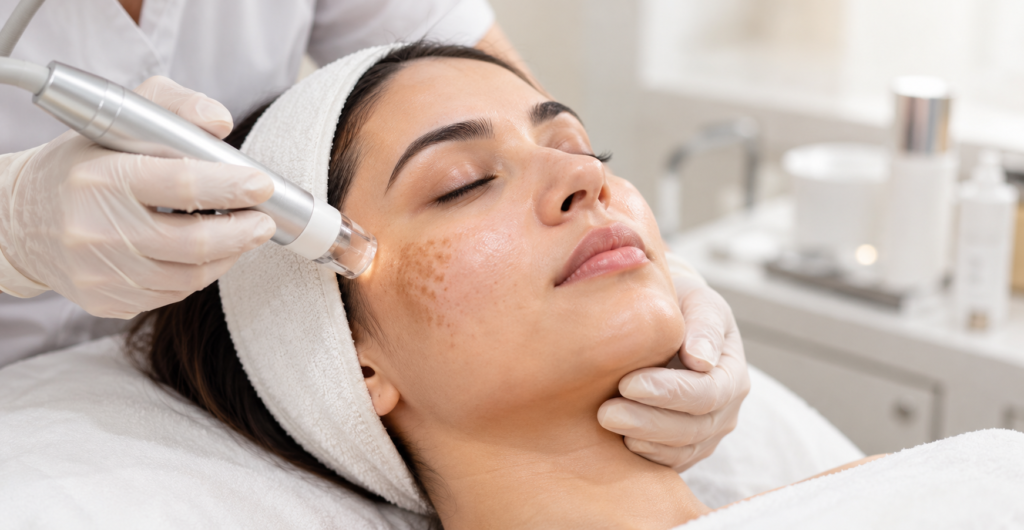
Diwali is a time for celebrations, family gatherings, and photographs. If you are concerned about dark spots, pigmentation, post-acne marks, or dull skin, starting your skincare preparation early can help you choose the right treatment.
The best pigmentation treatment depends on the cause of discoloration, your skin type, and the time available before Diwali. Not every dark spot requires a laser or chemical peel, and last-minute procedures may cause unnecessary irritation.
At Skin Series, a doctor-led medical aesthetics clinic in Thane West, treatments are personalised for individual skin concerns, with protocols designed for Indian and brown skin.
What Is the Best Skin Brightening Treatment Before Diwali?
The most suitable treatment depends on the concern being addressed.
- Pigmentation and post-acne marks: A structured pigmentation treatment plan may be appropriate.
- Selected dark spots: Laser toning may be considered after assessment.
- Dullness and uneven texture: Certain chemical peels may help.
- Active acne and recurring breakouts: Acne management should generally come before treating residual marks.
- Dehydrated skin: Suitable moisturisers and selected skin-quality treatments may help improve hydration.
Skin brightening means improving skin clarity and the appearance of uneven tone, not changing your natural skin colour.
1. Blemish Free Program for Pigmentation
The Blemish Free Program at Skin Series focuses on pigmentation, post-acne marks, and uneven skin tone through structured, personalised treatment planning.
Who May Benefit?
Women concerned about persistent dark spots or marks left after acne may benefit from an assessment to identify the type of pigmentation and suitable options.
Depending on the assessment, the plan may include:
- Depigmenting laser treatments where appropriate.
- Personalised home-care recommendations.
- Progress reviews and guidance for ongoing skin maintenance.
Important: Skin Series states that the Blemish Free Program is not designed for melasma. Suspected melasma requires a separate medical assessment and suitable management plan.
2. Laser Toning for Selected Pigmentation Concerns
Laser toning uses controlled laser energy to target certain forms of pigmentation. It may help improve the appearance of selected dark spots and uneven skin tone.
When Should You Start Laser Toning?
Consider a consultation several weeks before Diwali. Pigmentation may require multiple sessions, and results generally develop gradually.
Laser toning may not be suitable for every pigmentation condition. Incorrect settings can cause burns, irritation, or additional pigmentation, particularly in brown skin.
Explore laser toning treatment in Thane to learn more about this option.
3. Chemical Peel for Dullness and Uneven Texture
A chemical peel uses selected exfoliating agents to encourage skin renewal. Depending on the peel and your skin condition, it may help improve:
- Dull-looking skin.
- Rough or uneven texture.
- Certain types of pigmentation.
- Some post-acne marks.
Is a Chemical Peel Suitable Before Diwali?
The type and strength of the peel determine the recovery time. Redness, dryness, sensitivity, or visible peeling can occur, so avoid trying an unfamiliar peel immediately before a major event.
Learn more about chemical peel treatment in Thane and discuss suitability with a qualified practitioner.
4. Skincare Ingredients for Pigmentation Maintenance
A consistent home-care routine helps support skin health and reduce factors that may worsen pigmentation.
Depending on the concern and your skin’s tolerance, a clinician may recommend:
- Azelaic acid: May help with certain types of acne-related pigmentation.
- Vitamin C: An antioxidant that may help improve the appearance of some dark spots.
- Niacinamide: Helps support the skin barrier and may improve uneven tone.
- Retinoids: May be used for selected pigmentation concerns but can cause irritation.
Do not introduce several active ingredients at once. Irritation can make pigmentation worse, and prescription-strength products should be used with appropriate medical guidance.
Why Is Sunscreen Important for Pigmentation?
Daily sun protection helps prevent existing pigmentation from becoming darker and reduces further UV exposure.
- Use broad-spectrum sunscreen with SPF 30 or higher.
- Reapply as directed, especially when outdoors.
- Consider shade, hats, and protective clothing.
- If you have melasma or visible-light-sensitive pigmentation, ask whether tinted sunscreen containing iron oxides may be suitable.
The American Academy of Dermatology’s guide to fading dark spots provides additional guidance.
5. Treat Active Acne Before Post-Acne Marks
If you have active pimples and dark marks together, managing ongoing breakouts is often an important first step. Continued inflammation can create new marks while older ones are fading.
The Acne Erase Program at Skin Series focuses on active acne, recurring breakouts, and supporting the skin barrier through a phased approach.
Once acne is appropriately controlled, remaining pigmentation can be assessed separately. Acne scars involving depressed or raised skin require a different assessment from flat brown marks.
When Should You Start Pigmentation Treatment Before Diwali?
Your timeline depends on the procedure, the type of pigmentation, and your skin’s response.
| Timing | What to focus on |
| 4–8 weeks before | Arrange an assessment and discuss suitable pigmentation treatments. Some concerns need longer. |
| 2–4 weeks before | Follow an established treatment plan and allow sufficient recovery time. |
| Final week | Maintain familiar skincare, moisturise, use sunscreen, and avoid unfamiliar procedures. |
These are general planning guidelines, not guaranteed treatment timelines. Pigmentation may take several weeks or months to improve.
How Do You Choose the Right Pigmentation Treatment?
Start by identifying the concern rather than selecting a procedure based on popularity.
| Skin concern | Approach to discuss |
| Post-acne marks | Control active acne and assess the remaining pigmentation. |
| Selected dark spots | Consider suitable skincare or targeted treatment after assessment. |
| Uneven skin tone | Discuss whether laser toning or another approach is appropriate. |
| Dullness and rough texture | Review home care and the suitability of a chemical peel. |
| Suspected melasma | Seek a dedicated medical assessment and management plan. |
Why Choose Skin Series for Pigmentation Treatment in Thane?
Skin Series is a doctor-led medical aesthetics clinic in Thane West, Mumbai, focused on personalised skin and hair programs designed for Indian and brown skin.
The clinic’s approach considers the type of pigmentation, skin condition, possible triggers, and treatment goals before recommending a plan.
Whether you are concerned about dark spots, post-acne marks, or uneven skin tone, the first step is to understand what is causing the discoloration.
Book a consultation with Skin Series to discuss appropriate treatment options and plan your skincare journey before Diwali.
Frequently Asked Questions
1. Which is the best skin brightening treatment before Diwali?
The best option depends on the cause of your concern. Laser toning may suit selected pigmentation concerns, while certain chemical peels may help with uneven texture. A consultation can help determine the appropriate approach.
2. How many sessions are needed to reduce pigmentation?
The number of sessions depends on the type and severity of pigmentation, the chosen treatment, and individual response. Some concerns require multiple sessions and maintenance.
3. Is laser toning safe for Indian and brown skin?
Laser toning may be suitable for selected concerns when the device, settings, and protocol are appropriate. Incorrect treatment can cause irritation or pigmentation changes, so professional assessment is essential.
4. Can a chemical peel permanently remove pigmentation?
No chemical peel guarantees permanent removal. Results depend on the underlying cause, treatment selected, sun exposure, and other contributing factors.
5. Can pigmentation return after treatment?
Yes. Sun exposure, hormonal influences, and recurring inflammation may contribute to pigmentation returning. Suitable skincare, sun protection, and maintenance can help manage recurrence.
6. Is the Blemish Free Program suitable for melasma?
No. Skin Series states that the Blemish Free Program is not designed for melasma. Suspected melasma should be assessed separately so an appropriate management plan can be recommended.
7. Can I start pigmentation treatment one week before Diwali?
One week may be too short for meaningful improvement in established pigmentation. Some procedures can also cause redness, peeling, or irritation. Avoid unfamiliar treatments immediately before an important event.
8. What is the best home remedy for pigmentation?
No home remedy reliably removes established pigmentation within a few days. Gentle skincare and consistent sun protection are useful foundations. Avoid harsh scrubs, lemon juice, bleach, and irritating DIY treatments.
Final Takeaway
The best pigmentation treatment before Diwali is the one that suits your skin condition and allows enough time for treatment and recovery. Skin Series prioritises doctor-led assessment, protocols designed for Indian and brown skin, and personalised plans that consider long-term skin health.


